The European Union is set to introduce proposals on Tuesday that would see the bloc slash its dependency on Russian gas.
 © Provided by DW Energy has become a key point of discussion since Russia invaded Ukraine
A raft of emergency measures are set to be proposed by the European Commission as the bloc reacts to the ongoing conflict in Ukraine.
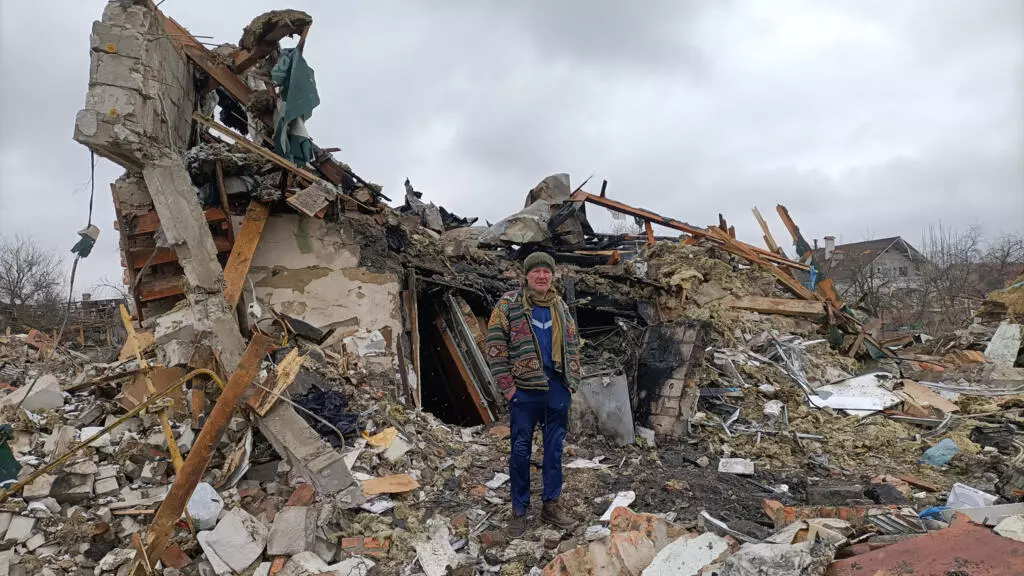
Russia's invasion of its neighbor has injected a sense of urgency into this EU endeavor, not only because Russian gas reaches the bloc via Ukrainian territory, but also due to fears that the Kremlin could cut off supplies.
EU aims to be independent of Russian gas 'within years'
In 2019, Russian gas accounted for 41% of the bloc's imports. EU Green Deal chief Frans Timmermans told the European Parliament on Monday evening that the proposals, which have been heavily revised in the days since President Vladimir Putin sent Russian troops into Ukraine, could make the EU independent of Russian gas "within years."
The EU is looking for new energy sources, in particular liquefied natural gas (LNG). According to news agency DPA, talks are under way between the EU and major LNG purchasers such as Japan, South Korea, China and India, to divert surplus supplies to Europe by sea.
Russia threatens to cut supply to Europe
On the eve of Tuesday's announcement by the European Commission, Russia's vice premier Alexander Novak hit back at the EU's attempts to throttle Moscow, saying it has "the full right" to impose an embargo on gas deliveries through the Nord Stream 1 pipeline in response to Germany's decision to halt the Nord Stream 2 project.
Novak said the Nord Stream 1 pipeline, which carries Russian gas to Germany via the Baltic Sea, is "utilized at a maximum of 100%." Novak also warned that a ban on Russian energy imports would have "catastrophic" consequences for Europe.
"Nobody will benefit from this," Novak told Russian state television. "Although European politicians are pushing us to this with their statements and accusations against Russia."
German Chancellor Olaf Scholz said that although Berlin supported tough measures against Moscow, Russian energy supplies remained "essential" for daily life in Europe.
"Europe's supply with energy for heating, for mobility, power supply and for industry cannot at the moment be secured otherwise," Scholz said in a statement.
Russia is the largest supplier of natural gas to Germany, currently accounting for 38% of imports, according to government statistics. Gas accounts for around a fifth of German power production.
All sanctions options on the table, says Dutch FM
On Tuesday morning, Dutch Foreign Minister Wopke Hoekstra told reporters that more sanctions are possible.
"No measures are out of bounds for the Netherlands, including energy," Hoekstra said.
"It's extremely important to take into account the position of all our European allies, some of them are much more dependent on oil and gas than the Netherlands. Others should be able to bear the burden as well," he added.
The Kremlin has warned that the price of oil could soar if the West steps up its economic sanctions against Russia by banning energy imports.