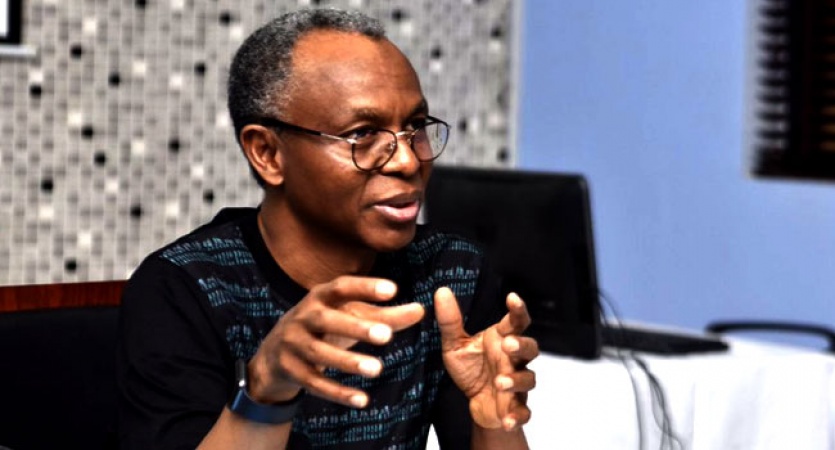
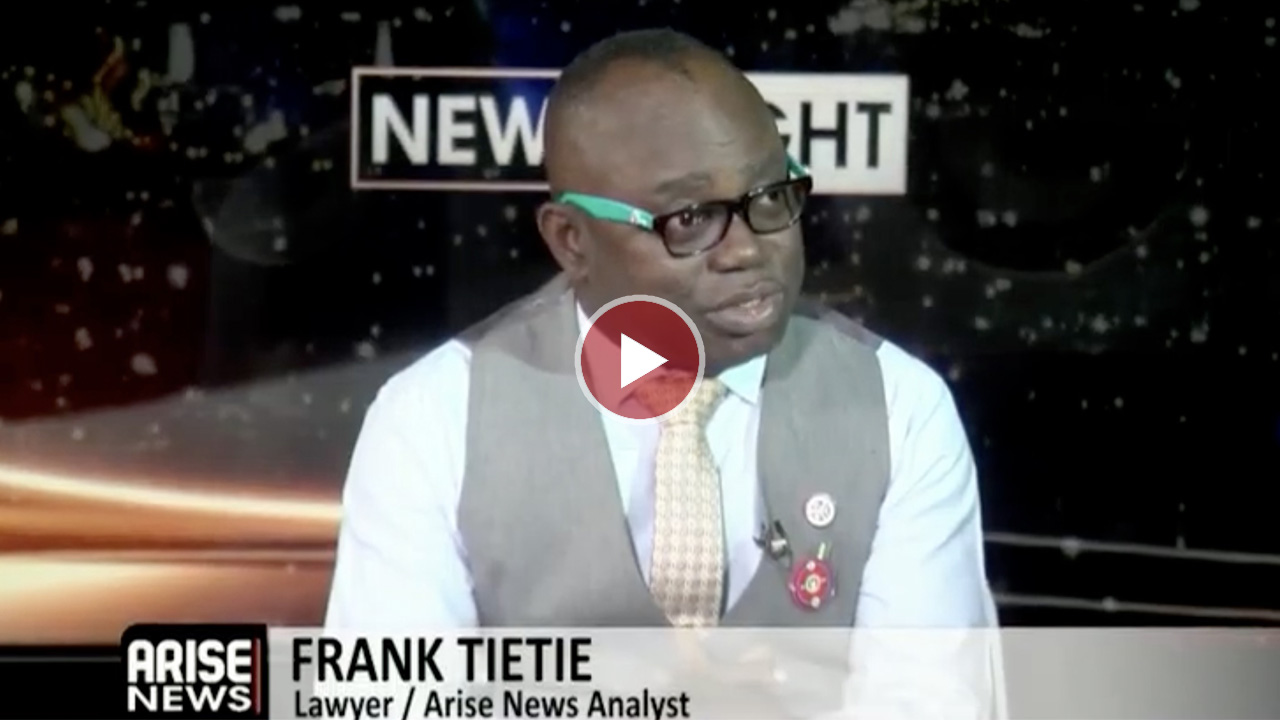
Frank Tietie warns Trump’s Venezuela move undermines UN Charter and threatens weaker states worldwide.
Lawyer, Frank Tietie has described as “absolutely unlawful” the reported declaration by United States President Donald Trump that the US would assume control of Venezuela, warning that the move exposes the collapse of the United Nations–led international order and poses grave risks to weaker states, including African countries.
Tietie in an interview with ARISE News on Sunday while examining the implications of President Trump’s comments on Venezuela, particularly from the standpoint of sovereignty and international law.
“It is absolutely unlawful, quite illegal. The United States has gone against all the tenets of the United Nations Charter, which was meant to prevent the unauthorised use of force,” Tietie said.
He argued that the situation reveals a harsh reality about the global system.
“What we are witnessing is the reality of the international order, an international system dictated by the victors, by the powerful, by the mighty,” he said.
“The United Nations is again being tested, just like the League of Nations was tested and failed.”
According to Tietie, the crisis demonstrates that global peace mechanisms only function when powerful states allow them to.
“If we ever have a United Nations that can prevent a global security crisis, it will only exist if global powers permit it,” he said.
“By this action, the United States has declared that the UN Charter is a matter of convenience when its own interests are concerned.”
He warned that the erosion of international law leaves weaker states dangerously exposed.
“The UN system was designed to protect weaker countries, smaller countries, particularly countries in Africa,” Tietie said.
“But what we now have is a new order where members of the UN Security Council—whether Russia or the United States—can do whatever they want in the name of national interest.”
While acknowledging historical precedents such as Iraq, Libya, Panama and Nicaragua, Tietie said the world should stop pretending that sovereign equality is genuinely respected.
“Let’s not deceive ourselves with rhetoric that the UN Charter and the principle of sovereign equality are respected. In reality, that does not exist,” he said.
“The United States became a unipolar power after the Second World War, and the world is largely at its mercy.”
Tietie expressed concern about President Trump’s posture and rhetoric, describing him as unpredictable and dangerous.
“President Trump has built a reputation for himself by carrying out whatever he pronounces, however wild, unsubstantiated or illegal it may be,” he said.
“That is a very serious problem, especially for leaders in Africa.”
On diplomatic responses, Tietie was blunt about the limits of diplomacy.
“Realistically, diplomacy does not work in this kind of situation, especially when you have an unhinged personality as president of the most powerful country in the world,” he said.
He pointed to America’s overwhelming military power as a decisive factor.
“The United States spends about one trillion dollars annually on defence and has over 750 military bases around the world,” he said.
“Such a country sees military might not just as protection, but as a tool to advance its interests.”
Tietie argued that humanitarian narratives are often used to mask economic motivations.
“Democracy becomes a veneer for self-interest,” he said.
“When Trump speaks about genocide or narco-terrorism, the real issue often turns out to be control of oil and gas.”
Drawing parallels with Nigeria, he warned that similar justifications could be deployed elsewhere.
“Trump once made pronouncements about Nigeria under the guise of Christian genocide, yet Christians and Muslims are indiscriminately killed by terrorists here, which he refused to acknowledge,” Tietie said.
“Now he moves into Venezuela under the guise of narco-terrorism and begins to talk about controlling Venezuela’s oil and gas.”
He said America’s foreign policy is driven squarely by national interest.
“America First is not a slogan. It is a doctrine,” he said.
“American interests supersede whatever the UN Charter recommends.”
Asked whether US intervention could ever be justified as protecting democracy, Tietie questioned whose democracy was being defended.
“Whose democracy?” he asked.
“When African leaders spoke of Afro-cracy, that was our own form of democracy. It does not have to be American-style democracy.”
He described President Trump as a “disruptor-in-chief” whose actions demand a rethink of global security.
“There is a disruptor-in-chief in town, and that is the President of the United States,” Tietie said.
“Collective security should not be at the mercy of any major power—whether Russia moving into Ukraine or the United States moving into Venezuela or tomorrow into Nigeria.”
Referencing US military activity near Nigeria, Tietie said Washington was testing boundaries.
“Moving into the Gulf of Guinea and sending rockets deep into Nigeria was a signal,” he said.
“It was asking Nigeria to appease the United States, and Nigeria’s swift decision to own that operation prevented chaos.”
He warned that Trump is unconcerned about legal or diplomatic norms.
“This is a president who does not care about the nuances of international law,” he said.
“He would rather deploy raw military power than covert operations.”
On how African states should respond, Tietie said options were limited.
“African states do not have many options at this time except to appease Donald Trump,” he said.
However, he cautioned that governance alone may not shield countries.
“Even if a country has good governance, if America wants to advance its interests, it will find a reason,” he said.
“It is all about economics.”
Tietie concluded by urging African leaders to be strategic and vigilant.
“Countries must avoid giving Trump the opportunity to intervene,” he said.
“The United States is seeking returns on the one trillion dollars it invests annually in defence. That is the reality we must confront.”
He warned that failure to manage this global disruption could have devastating consequences.
“There is chaos being created, and if it is not managed, it will not consume only Venezuela, but many other interests—including my own country, Nigeria,” Tietie said.