According to the US Department of State, the fees paid without the direction of a consular officer will not be refunded, and do not guarantee automatic visa issuance.
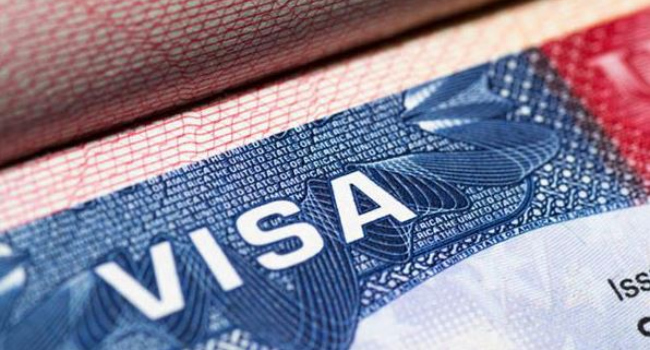
Nigerians and other travellers applying for the United States’ B1/B2 visas may be required to post bonds of up to $15,000, according to a new travel restriction by the US State Department.
Visa bonds are financial guarantees required by the Department for certain foreign nationals from countries classified as high-risk who are applying for B1/B2 visas for business or tourism purposes.
The development further tightens entry conditions for travellers, following the introduction of partial US travel restrictions on Nigeria a week earlier.
According to information published on the US Department of State’s website, Travel.State.Gov, the fees paid without the direction of a consular officer will not be refunded, and do not guarantee automatic visa issuance.
Of the listed nations, African countries accounted for 24 of the 38, including Nigeria, in the updated list released by the Department on Tuesday.
The Department of State said nationals from the listed countries have been identified as requiring visa bonds, with implementation dates shown in parentheses.
In Nigeria’s case, the US cited the presence and operations of radical Islamic terrorist groups such as Boko Haram and the Islamic State in certain parts of the country, resulting in “substantial screening and vetting difficulties.”
The implementation dates vary by country, with Nigeria’s date set for January 21, 2026.
An overstay rate of 5.56 per cent for B1/B2 visas and 11.90 per cent for F, M, and J visas was also cited as a justification for Nigeria’s inclusion. As a result, the travel suspension covered immigrant visas as well as non-immigrant categories, including B-1, B-2, B-1/B-2, F, M, and J visas.
The directive states that, “Any citizen or national travelling on a passport issued by one of these countries, who is otherwise found eligible for a B1/B2 visa, must post a bond of $5,000, $10,000, or $15,000. The amount is determined during the visa interview.
“Applicants must also submit the Department of Homeland Security’s Form I-352. Applicants must also agree to the terms of the bond through the US Department of the Treasury’s online payment platform, Pay.gov. This requirement applies regardless of the place of application.”
Nigeria was among 15 mostly African countries, including Angola, Antigua, Benin, Côte d’Ivoire, Gabon, The Gambia, and others, that were placed under partial travel suspensions by the US government on 16 December.
It added that Visa holders who post bonds must enter the United States through designated airports, including Boston Logan International Airport, John F. Kennedy International Airport in New York, and Washington Dulles International Airport in Virginia.
Bonds will only be refunded when the Department of Homeland Security records the visa holder’s departure from the United States on or before the expiration of their authorised stay, when the applicant does not travel before the visa expires, or when a traveller applies for and is denied admission at a US port of entry.
See Highlights Below:
How Much Will Nigerians Need to Pay?
Under the new policy, Nigerians may be required to post a refundable visa bond of one of the following amounts:
* $5,000
* $10,000
* $15,000
The exact amount is not fixed in advance but is decided by the U.S. consular officer during the visa interview.
In addition to the bond, the applicant must also submit a Department of Homeland Security Form I-352 and agree to the terms of the bond through the Department of the Treasury’s online payment platform Pay.gov.
Ports Of Entry
When a traveller is issued a visa after posting a bond, there are three designated entry and exit ports for that person: the Boston Logan International Airport (BOS), John F. Kennedy International Airport (JFK), and Washington Dulles International Airport (IAD).
“Not doing this might lead to a denied entry or a departure that is not properly recorded,” the State Department said.
The Process: Step By Step
Here’s how the visa bond requirement works from start to finish:
- Apply for a U.S. B1/B2 Visa as usual
This begins with filling out your DS-160 and scheduling a consular interview at the U.S. Embassy in Abuja or the Consulate in Lagos.
- Interview with Consular Officer
During the interview, if the officer finds you are otherwise eligible for the visa and identifies you as someone subject to the bond rule, they will inform you that a bond is required and determine the amount ($5,000–$15,000).
- Submit Form I-352
You must complete Department of Homeland Security Form I-352, the visa bond form, as part of the bond process.
- Pay the Bond via Pay.gov
The payment must be made online through the U.S. Department of the Treasury’s official payment platform (Pay.gov). You will be given a direct link to pay only after the consular officer instructs you. Paying through third-party sites is not allowed and won’t be refunded.
- Bond Is Held Until Conditions Are Met
The bond stays with the U.S. government until one of these happens:
* You leave the U.S. on or before your authorised stay
* You never travel on the visa before it expires
* You are denied entry at the U.S. port of entry
- If one of those conditions is met, your bond is refunded.
Travel Conditions
After paying the bond, one key requirement tied to this bond is entry and exit through designated U.S. airports — specifically:
* Boston Logan International Airport (BOS)
* John F. Kennedy International Airport (JFK)
* Washington Dulles International Airport (IAD)
Failing to use these ports of entry may result in denied entry or failure to properly record your departure.
List Of Affected Countries
* Algeria (January 21, 2026)
* Angola (January 21, 2026)
* Antigua and Barbuda (January 21, 2026)
* Bangladesh (January 21, 2026)
* Benin (January 21, 2026)
* Bhutan (January 1, 2026)
* Botswana (January 1, 2026)
* Burundi (January 21, 2026)
* Cabo Verde (January 21, 2026)
* Central African Republic (January 1, 2026)
* Cote D’Ivorie (January 21, 2026)
* Cuba (January 21, 2026)
* Djibouti (January 21, 2026)
* Dominica (January 21, 2026)
* Fiji (January 21, 2026)
* Gabon (January 21, 2026)
* The Gambia (October 11, 2025)
* Guinea (January 1, 2026)
* Guinea Bissau (January 1, 2026)
* Kyrgyzstan (January 21, 2026)
* Malawi (August 20, 2025)
* Mauritania (October 23, 2025)
* Namibia (January 1, 2026)
* Nepal (January 21, 2026)
* Nigeria (January 21, 2026)
* Sao Tome and Principe (October 23, 2025)
* Senegal (January 21, 2026)
* Tajikistan (January 21, 2026)
* Tanzania (October 23, 2025)
* Togo (January 21, 2026)
* Tonga (January 21, 2026)
* Turkmenistan (January 1, 2026)
* Tuvalu (January 21, 2026)
* Uganda (January 21, 2026)
* Vanuatu (January 21, 2026)
* Venezuela (January 21, 2026)
* Zambia (August 20, 2025)
* Zimbabwe (January 21, 2026)