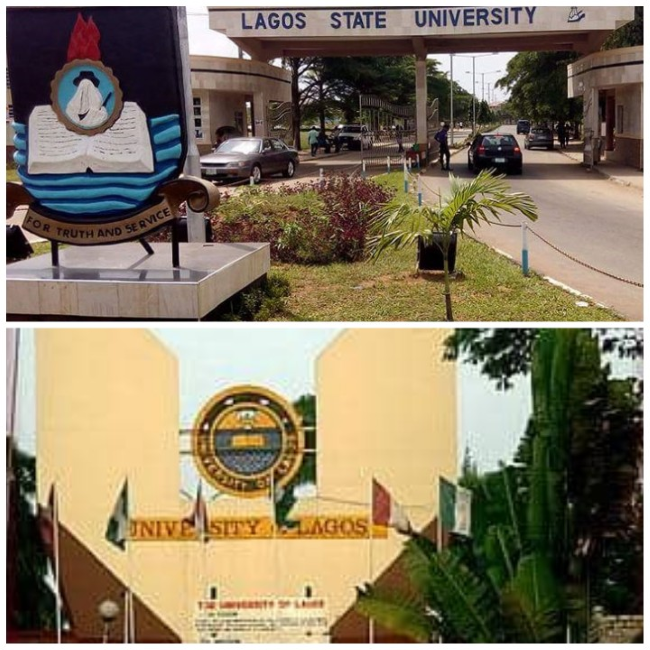
The chances of an average Lagos resident providing university education for their children are becoming slimmer by the day due to outrageous fees, particularly accommodation costs, charged at the state’s two major government-owned universities: the University of Lagos (UNILAG), Akoka and the Lagos State University (LASU), Ojo.
The accommodation crisis in both institutions has continued to disrupt academic activities, forcing many students to miss classes, squat with friends, or commute long distances daily.
P.M.NEWS reporters visited the institutions and spoke with students who shared their experiences on condition of anonymity for fear of victimisation.
LASU: High costs, poor facilities
Findings at LASU revealed that the school operates two categories of hostels: old hostel blocks and new hostel blocks. Accommodation in the old hostels cost ?282,500 per student, with four students assigned to a room. This translates to ?1,130,000 per room for an academic session.
In the new hostels, each student pays ?352,500, bringing the total cost per room to ?1,410,000 per session. This is in an area where a room apartment typically rents for between ?80,000 and ?100,000 annually.
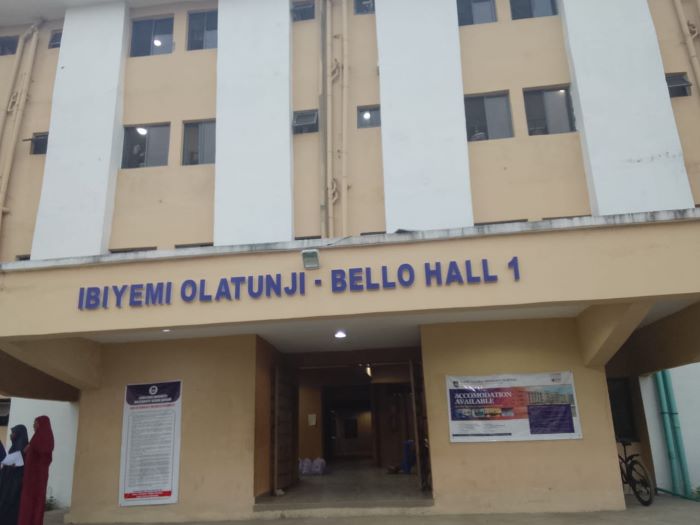 Accommodation at LASU’s Ibiyemi hostel costs N352,500 per student
This is despite persistent challenges, especially in the old hostels, including deteriorated toilet facilities and lack of potable water. Students also complained of irregular power supply, which often exacerbates water shortages and leads to unbearable stench from the toilets.
As a result, many students now seek accommodation off-campus or commute from home— options that come with safety risks, high transportation costs, and frequent lateness or absence from lectures, ultimately affecting academic performance.
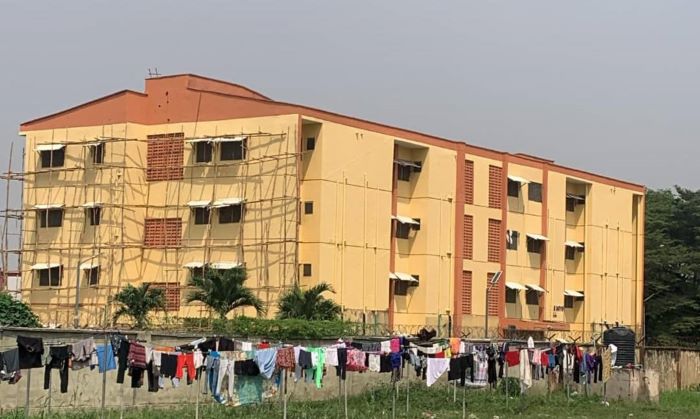 One of the old hostels at LASU, just repainted
When P.M.NEWS pointed out the dangers associated with off-campus accommodation, including insecurity and high transport fares, students said they preferred those risks to exposure to infections caused by overcrowding and poor sanitary conditions in the hostels.
They also disclosed that hostel spaces could accommodate less than 50 per cent of the student population, making the accommodation challenge seemingly intractable.
The situation has also triggered a sharp rise in rent within the Ojo area. A room self-contained apartment that previously rented for about ?150,000 now goes for between ?380,000 and ?420,000, depending on location and available facilities.
Students are now in a quandary, while parents groan under the crushing cost of accommodation and other fees, with fears growing that some students may be forced to withdraw from their programmes.
A 200-level student residing at the Ibiyemi Olatunji-Bello Hostel listed water as the most pressing challenge.
“The water is not clean. Sometimes, you can see particles and oil on the surface, and it has an odour. Water is supposed to be colourless, odourless, and tasteless,” the student said.
She added that water supply is inconsistent, with availability limited to twice daily—morning and night.
 The coloured and oily water that runs in LASU’s hostels
However, she noted that power supply in the hostel is fairly constant and security is adequate, with the premises locked by 10 p.m. daily.
Conversely, conditions in the old hostels remain dire. A student residing in the Adenike Boho Hostel, described life there as “hellish.”
“Power supply is unstable, and water is scarce. The water is coloured and oily. Toilets are always filthy, with stench polluting our rooms and surroundings,” he lamented.
 A toilet turned blackish by the unclean LASU water
A final-year student of the institution said hostel accommodation was affordable during his early years at LASU but has witnessed a “crazy rise” in recent sessions. He appealed to the government and school authorities to intervene so that the hopes of low-income parents would not be dashed.
UNILAG: A worse situation
The accommodation crisis at the University of Lagos is more severe. Privately run hostels charge as much as ?700,000 per student, with four students sharing a room. This amounts to ?2.8 million per room yearly!
Although school-run hostels are cheaper at ?80,000 per student, they are grossly inadequate and largely neglected, with many in a state students described as uninhabitable.
As a result, hundreds of students squat with colleagues in overcrowded hostels, sleep in corridors and open spaces, or commute long distances daily.
This has reportedly led to poor academic performance, as many students miss lectures due to high transportation costs and fatigue. Lack of on-campus residency has also limited access to essential facilities such as the library.
A 200-level Management Sciences student said the accommodation challenge has severely affected her academics.
“I’ve been missing classes since last year. I’m lucky most of my courses are online, but I miss the physical ones because of accommodation issues,” she said.
She added that the discontinuation of hostel balloting has worsened the situation.
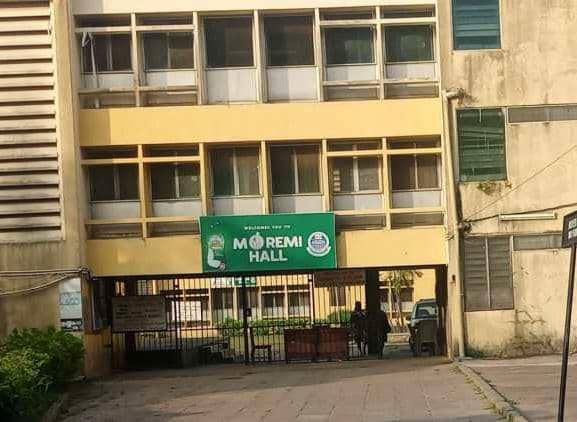 A very popular female hostel in UNILAG: Moremi Hall
“I spend about ?5,000 daily on transport, so I can only come to school twice a week. If this continues, it will affect me academically.”
A 400-level Chemistry student described her experience as “horrible,” saying she couldn’t secure a bed space in her early years on campus.
“I slept on the floor in my first and second years. The environment was not conducive at all,” she said.
Another student, who now commutes from Mowe—about 42 kilometres from campus—said private hostels are unaffordable while school hostels are either unavailable or dilapidated.
Students have called on university authorities to urgently expand hostel capacity, improve existing facilities, review accommodation policies, and provide affordable alternatives.
Many fear that the next academic session will be a big disaster if urgent action is not taken by the government and school management to arrest the alarming trend.