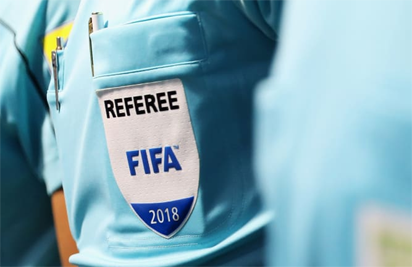
For the 19th straight year, no Nigerian referee or assistant referee has been selected to officiate in the CAF Africa Cup of Nations (AFCON), raising concerns among football stakeholders.
The recently concluded AFCON 2025—widely regarded by enthusiasts as the most spectacular continental football showpiece ever staged—featured a team of 73 match officials, including 28 referees, 31 assistant referees, and 14 video assistant referees (VAR).
Yet, no Nigerian referee made the cut.
Although FIFA has not released the names of those selected to officiate at the 2026 FIFA World Cup to be jointly hosted by the U.S., Canada and Mexico, the likelihood of a Nigerian representation is very slim.
This is because no Nigerian referee was selected for the CAF AFCON 2025 preparatory course, a prerequisite for participation.
Stakeholders say Nigerian referees are consistently overlooked for major FIFA and CAF tournaments due to many issues.
Prince Harrison Jalla, former Nigerian players’ union president and football analyst, said there are so many issues responsible for Nigeria’s woes when it comes to referees’ participation at major CAF and FIFA tournaments.
He listed low competence, concerns over the integrity of domestic officiating, corruption, perceived bias and sentiment, and poor physical/technical test results as some of the factors responsible.
“Nigerian referees are not just simply good enough. The good ones are often shut out by the system because they don’t do their bidding.
“The NFF referees committee is one of the most corrupt committees in Nigerian football; it is like a business centre.’’
Jalla added that Nigerian referees often failed to meet the stringent criteria required by CAF and FIFA, leading to a 19-year streak without Nigerian representation at AFCON.
Also, no Nigerian referee has ever officiated at the FIFA World Cup.
“Good referees cannot simply be processed in a system that neglects merit in assessing and grading its referees.
“The Nigeria Referees issue is a systemic failure and a big embarrassment to the country.
“It is a total rebuilding process of our football structure that can address the Nigeria issue,” he said.
In 2018, the News Agency of Nigeria (NAN) reported that, at the FIFA World Cup in Russia, no Nigerian referee was selected among the six referees and 10 assistants chosen by CAF.
Also, at the 2022 World Cup in Qatar, Nigerian referees were again left out of the list of African officials put together by FIFA to officiate at that year’s tournament.
Interestingly, the eight centre referees picked for the tournament all officiated at previous AFCON, with some of them already officiating at previous World Cup tournaments.
Prominent FIFA-badged referee, Ferdinand Udoh, said issues with integrity, favouritism, corruption and inadequate capacity development are impediments hindering Nigeria’s progress when it comes to refereeing.
“We are not deliberate about refereeing in this country. Also, the people handling the refereeing aspect of the game at the NFF are lost to what should be done, how it should be done and when it should be done.
“Rather, we are playing out sentiments. I will give you an example: There is this referee from Zamfara, a shining light who was supposed to be at two AFCONs by now.
“He was involved in a match-fixing scandal with the Moroccan FA in one of the age-grade tournaments.
“FIFA said he should be dropped and replaced but, unfortunately, he was still on the list because the NFF president is from Zamfara.
“He continued to occupy a space that someone else should have taken, and FIFA and CAF will not consider him for any tournament.
“Take somebody like Dr Joseph Ogabor, who is the most senior referee in Nigeria, they overlooked him and picked the guy I was referring to.
“Unfortunately, both of them were involved in some scandals at one time or another. So, what credibility credentials do we have to show CAF and FIFA?”
Udoh, who won the “Best Referee in Nigeria” award from 2014 to 2017, said if Nigeria wanted to turn the tide, all football stakeholders should be deliberate about referee development.
He also said the funds provided for referee development by FIFA should be put into appropriate and judicious use.
“The money that FIFA releases yearly for referee development should be used for that purpose; it should not be diverted into something else or someone else’s pocket.
“FIFA channels money into referee development but where does the money go to? We should also do away with sentiment and favouritism.
“There is a FIFA-badged referee from Borno; that guy has nothing to do with officiating.
“This guy cannot log on to CAF, and when you want to submit your report as a FIFA referee when you go for games, you do so online.
“We also need to build the capacity of our referees. That is where that referee development fund comes in.
“There is this young referee who had not travelled out of the country before.
“He missed his course because he did not know how to process his documents and no one at the federation was willing to help him without demanding bribes.
“They are quick at sanctioning referees when they make mistakes in games, but they are not ready to support the development of the same referees.
“When you speak out, you will be victimised,” he said.
Some stakeholders say Nigerian referees lag behind their counterparts from other African countries when it comes to technical skills and VAR exposure and often fail required technical and physical assessments set by CAF.
They have been frequently criticised for poor performance and bias towards home teams in the Nigerian Premier Football League (NPFL), often fueled by fear of crowd violence, making them unsuited for high-pressure international games.
According to a former CAF Referees Committee President, Suleiman Waberi, while Nigerian referees are talented, they must improve both technically and in terms of reputation to compete with the top referees on the continent for such positions.
Football politics and Nigeria’s lack of adequate representation in CAF and FIFA committees also contribute significantly to why the country’s referees are being overlooked.
Stakeholders say Nigeria’s counterparts in northern and southern Africa dominate key officiating positions; thereby giving them the needed leverage to influence referee selection, as well as other decisions.
“We all remember the time Dr Amos Adamu was in football administration; he carried a very heavy voice in favour of Nigeria, and the impact was felt.
“He was an executive committee member of both FIFA and CAF who was picked as a member of the organising committee for the first-ever World Cup in Africa. Such was his influence.
“Former NFF president, Amaju Pinnick, was only appointed as a Special Adviser to the CAF president, Dr Patrice Motsepe, after his loss in the election to retain his seat on the FIFA Council.
“These days, we more or less do not have a voice in those associations,” Sikiru Kehinde, an analyst, said.
Nonetheless, Ibrahim Gusau, the President of the Nigerian Football Federation (NFF), is upbeat.
He said that efforts were being made to return Nigerian referees to the big stage of officiating.
Football enthusiasts say a concerted effort must be made towards certifying Nigerian referees in VAR technology, improving integrity, enhancing physical fitness, and acquiring regular international exposure.
(NANFeatures)