Retrieving full detail for australia floods thousands evacuated as downpours worsen...
ADVERTISEMENT
Follow us on
ADVERTISEMENT
Australia floods: Thousands evacuated as downpours worsen
BBC
|
March 22nd, 2021
|
599 views
Some 18,000 people have been evacuated from severe floods across New South Wales (NSW) in Australia, with more heavy rainfall predicted.
The state's entire coast is now under a severe weather warning.
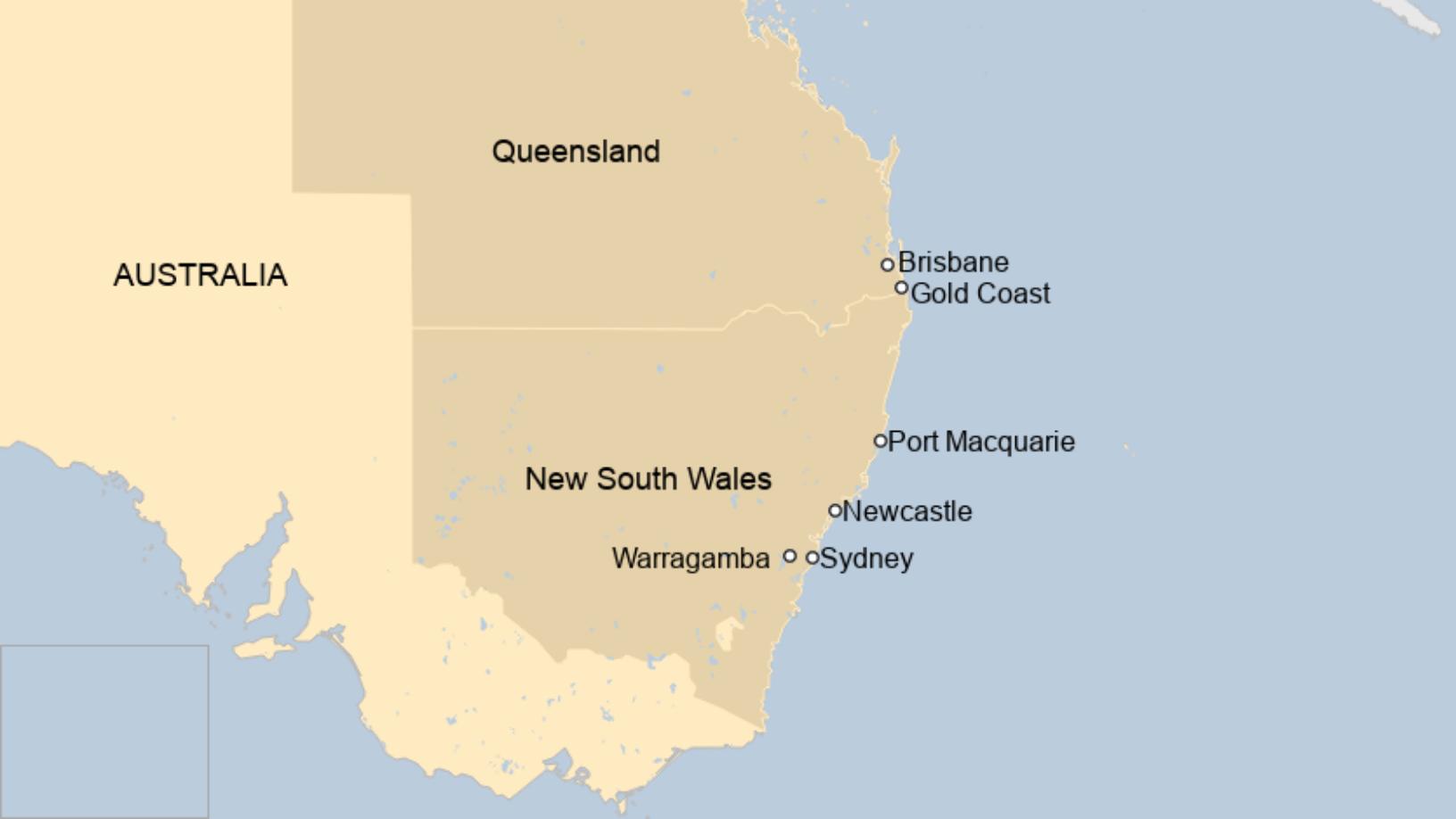
Days of torrential downpours have caused rivers and dams to overflow around Sydney - the state capital - and in south-east Queensland.
PM Scott Morrison has offered funds for those forced to evacuate, in what has been called a "one-in-50-years event".
Australia's Bureau of Meteorology has updated its severe weather warning, saying that Tuesday could see "increased rainfall, strong winds, damaging surf and abnormally high tides" in New South Wales.
It also said that some 10 million people across every state and territory except Western Australia were now under a weather warning.
NSW Premier Gladys Berejiklian said no deaths had been reported by late Monday - describing it as "a miracle given what we have been through".
But there has been widespread damage in the affected areas, which are home to about a third of Australia's 25 million people.
Ms Berejiklian said many of the communities "being battered by the floods" had been affected by bushfires and drought the previous summer.
"I don't know any time in state history where we have had these extreme weather conditions in such quick succession in the middle of a pandemic," she said.
What's the latest on the ground?
More than 15 areas in NSW, mostly low-lying have been put under evacuation orders and a similar number are under evacuation warnings.
Areas north and west of Sydney, the NSW Central Coast and the Hawkesbury valley were of particular concern.
There have been some 15,000 evacuations from the Mid-North Coast and a further 3,000 in Sydney, officials said.
Swollen rivers cut off roads and bridges and forced about 150 schools to shut on Monday.
WESTERN SYDNEY SES -This infant was rescued alongside another child, four adults and three dogs in Sydney's west
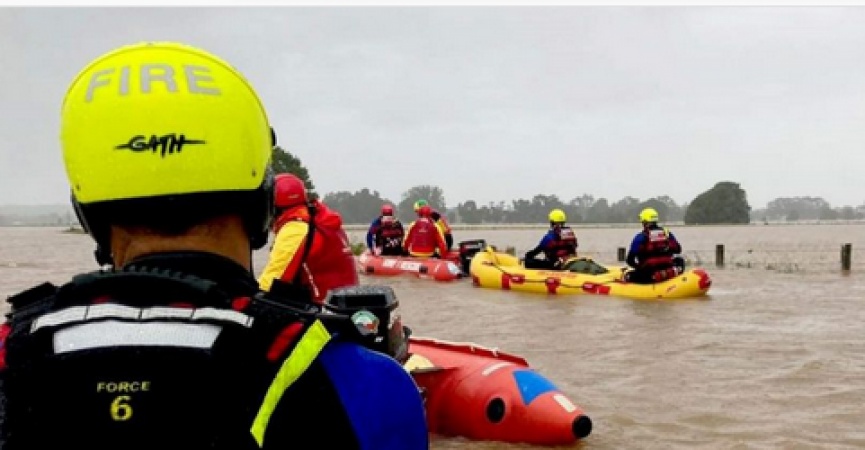
Emergency services have conducted at least 750 rescues, including winching people from cars. One stranded family was lifted from their flooded home by a helicopter.
Responders also saved a family with a baby from flooding in their home in Sydney's west.
There have been images of dead wildlife, livestock floating through flooded areas and rows of houses engulfed up to their windows.
The Hawkesbury and Nepean rivers - which border Sydney to the north and west - reached higher levels on Monday than during a devastating flood in 1961.
In addition, the Warragamba Dam, Sydney's main water source, began spilling over for the first time in five years. It reached a peak daily discharge on Sunday of 500 gigalitres - equivalent to the volume of Sydney Harbour - before falling back to 300 GL on Monday.
On Sunday a young couple saw their house north of Sydney swept away by flash floods on what should have been their wedding day. Shocked neighbours filmed the uprooted three-bedroom cottage bobbing along the Manning river after it burst its banks.
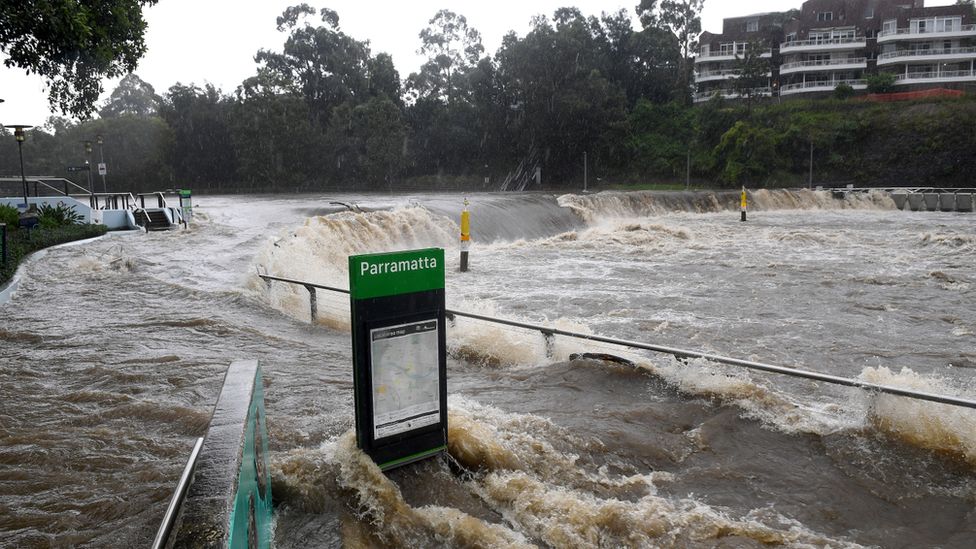
EPA -Parramatta River, in central suburban Sydney, broke its banks and flooded the ferry wharf
In Port Macquarie's North Shore, one resident was filmed dragging a stingray through what was his front lawn.
In south-east Queensland, flash floods also affected Brisbane and the Gold Coast at the weekend.
What is the latest forecast?
Conditions in many areas of New South Wales are expected to worsen, with officials warning that two weather systems could collide, creating a "last blast" of rain and storms going into Wednesday.
The Bureau of Meteorology said heavy rainfall would affect the whole NSW coast and several inland areas on Tuesday, bringing a "serious risk" of flash flooding.
"Most areas of New South Wales will see a clearing trend early Wednesday as a drier airmass moves into the region," it said.
It also sent out a tweet saying 10 million Australians were now under a weather warning - affecting an area the size of Alaska.
The bureau said the rainfall so far - up to 90cm in some areas - had been "extraordinary", with many areas across NSW resembling an "inland sea".
Ms Berejiklian, the NSW premier, said: "What we're going through now is different to what you've been through for the last 50 years, so please take it seriously."
Jamisontown resident Ellen Brabin told ABC News that she had not seen floods as severe as this in more than 40 years.
"I've seen all the floods and stuff, and never had to move before so this is different," she said.
From fires to floods
The intense summer of rain and floods in eastern Australia is a stark contrast to a year ago, when many of the same areas were scorched by mammoth bushfires and ravaged by drought.
This side of the continent is currently experiencing a La Niña weather pattern, which typically brings more rainfall and tropical cyclones during summer.
Two of Australia's three wettest years on record have been during La Niña events. Typically a La Niña sees a 20% increase in average rainfall from December to March in eastern Australia.
Scientists say that climate change is also intensifying La Niña's impact, and making weather patterns more erratic.