


He wrote: “After two emergency ruptured aneurysms, brain surgery in Lagos and a massive scar across his head, my dad is back to his same jolly self. The doctors say his survival was miraculous, the neurologist says that it is rare for someone to recover full brain function so quick. The German checkup doctors said the Nigerian doctors did a world-class job. All check-ups given clean bill of health. Six months of brain function recovery, and he is now back to normal.”
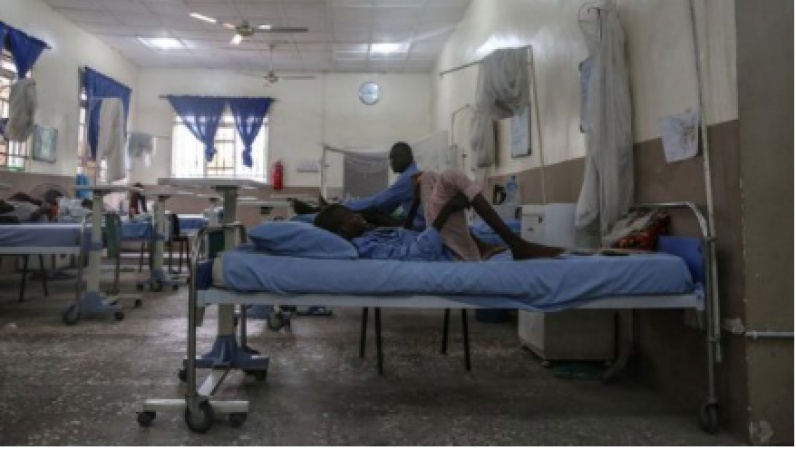
The Guardian investigation revealed that some patients have lost their lives because most of the specialised hospitals refused to admit them for treatment while some on admission were discharged because there were not enough doctors to cater for them. It was also gathered that the National Association of Resident Doctors (NARD) disappointed those that were scheduled for emergency and critical surgeries because of the ongoing strike, now in its fifth day.
A concerned Nigerian wrote to The Guardian reporter at the weekend: “What can Nigerians do than to put their hope in God. This morning after prayers I was so concerned about the state of things in this country. I reflected on two pathetic issues within our network of family and friends.
“The pregnant wife of a relative was transferred to Obafemi Awolowo University Teaching Hospital (OAUTH) Ile-Ife, all the way from the riverine area of Ondo State for a life-saving operation because they thought the strike will not affect such a big institution. She was indeed admitted but had to be removed from the teaching hospital to a private hospital in Ifè after all necessary tests had been done, paid for and surgery was booked, because of strike! At the end she lost her baby though her life was miraculously saved by the grace of God. Now that family is in sorrow and in debt at the same time now.
“The other acquaintance was to do a complicated procedure in Lagos University Teaching Hospital (LUTH) Idi Araba, all the expensive tests had been done, ready for commencement of treatment but everything is now postponed to later in the month because of strike.
“Now I ask! Why do you blame Nigerians for praying to be wealthy? Right now, if you are not rich, I mean really rich what are you going to do? Who else do we have to turn to?”
A visit to some of the Federal Government hospitals in the Federal Capital Territory (FCT) showed that the hospitals only receive new patients that have emergency cases. When The Guardian visited the ever-busy National Hospital Abuja, the hospital was a shadow of itself as it was deserted
He said: “The strike is biting hard on patients because the house officers are the ones attending to us. What happens is that whenever resident doctors go on strike, it is as if the consultants too have gone on strike. Resident doctors are the ones doing the chunk of the work. They are attending to us because it is an emergency case but a lot of lives will be lost for those who have been on admission and could no longer get the treatment they need.”
The Public Relations Officer for the National Hospital, Dr Tayo Haastrup, told The Guardian that despite the resident doctors’ strike, consultants and nurses still attend to patients, only that the number of patients being attended to has reduced drastically.
The president of NARD, Dr. Uyilawa Okhuaihesuyi, disagrees with the notion that their industrial action is the cause of death in the hospitals. According to him, “people are not dying because of the strike. There are medical consultants in the hospitals taking care of patients. They should also put us into consideration. When you cannot take care of yourself, how can you take care of others? What has the government done for the doctors? Those doctors that died also have families. We have to live as human beings. The 17 doctors that died and the 1,824 others that were infected with COVID-19. Who takes care of their families?”
He added: “Government said N17.9 billion was spent on life insurance for doctors. If really such money was spent, where did the money go? The families of the late doctors have not received anything.” He stated that NARD would not call off the strike until all their demands are met.
Reacting on the issue, President of the Nigerian Medical Association (NMA), Prof. Innocent Ujah, told The Guardian: “NMA did not declare any strike. NARD is one of the nine affiliates bodies of NMA. It takes two to make a pact. The government should do its part. The government should at least pay hazard allowance. But they are not doing that. Look at the situation where the doctors are not paid for months. I don’t want to be repeating myself.”
Ujah said to resolve the lingering crisis in the Nigerian health sector, the NMA urged the government to prioritise and improve healthcare delivery to Nigerians and at the same time improve the welfare of medical practitioners and other health workers, which is considered the most sustainable means of delivering quality healthcare to citizens. He said this would help to reduce the current brain drain being experienced that is dealing a deadly blow to the healthcare delivery system, which has made Nigerian hospitals to be regarded as mere consulting clinics.



%26format%3Dwebp&w=256&q=75)
%26format%3Dwebp&w=256&q=75)