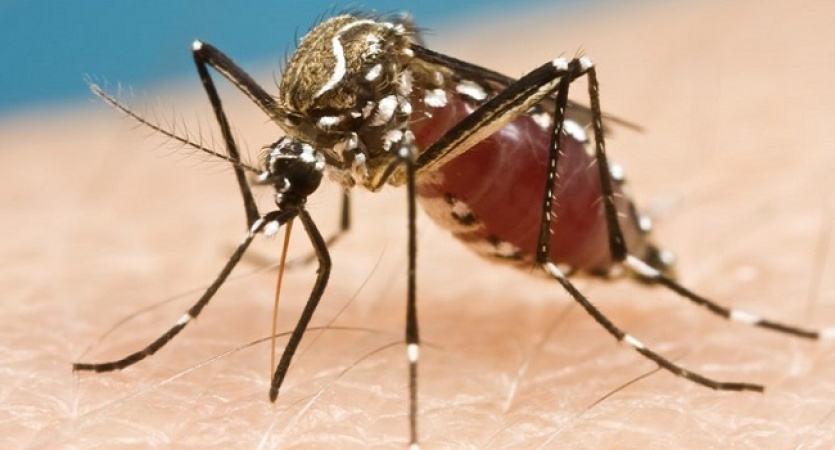
Malaria regularly causes deaths and man-hour losses in Nigeria. The Nigeria LNG Limited has kicked off an initiative with the potential of helping Nigeria kick out malaria. The initiative is in partnership with the United States President’s Malaria Initiative (PMI), which is focused on reducing malaria-related mortality by 50 percent across 24 high-burden developing countries, including Nigeria, through four highly effective malaria prevention and treatment measures,
Nigeria may one day be declared malaria-free. The country is now polio-free after years of an intensive campaign against the ailment. The journey that may earn the country malaria-free status is being championed by the Nigeria LNG Limited and the U.S. Agency for International Development (USAID). Since charity begins at home, the project is kicking off in Bonny Island, the home of NLNG’s multibillion dollars plants.
The kick-off
In March, NLNG signed a five-year Memorandum of Understanding (MoU) with the USAID to make Bonny Island, its operational base, malaria-free.
The MoU was signed in Abuja by NLNG Managing Director/Chief Executive Officer Tony Attah United States Ambassador to Nigeria Mary Beth Leonard.
The United States through its President’s Malaria Initiative (PMI) will provide technical assistance to the NLNG-led Bonny Island Malaria Elimination Project (BNYMEP). BNYMEP seeks to reduce the malaria burden, move the community to pre-elimination status, bring malaria-related mortality to zero, and make Bonny Island Nigeria’s first malaria-free zone.
The PMI is focused on reducing malaria-related mortality by 50 per cent across 24 high-burden developing countries in sub-Saharan Africa, including Nigeria and three Southeast Asian countries, through a rapid scale-up of four proven and highly effective malaria prevention and treatment measures. PMI techniques include insecticide-treated mosquito nets (ITNs); indoor residual spraying (IRS); accurate diagnosis and prompt treatment with artemisinin-based combination therapies (ACTs); and intermittent preventive treatment of pregnant women (IPTp).
The NLNG, said Attah, commenced the BNYMEP in January 2019 as part of its vision to transform Bonny Island into tourism and economic hub in West Africa. He added that a malaria-free zone was key to attracting investments to the Island.
Attah said: “We are ready to put Bonny Island on the map as one the first malaria-free community in Nigeria and a reference point in the global eradication of the disease. Malaria has impacted negatively on health care in Nigeria, and it is time to change the narrative. It is time to free ourselves of the economic burden that this scourge has imposed on us for years, freeing available resources to tackle other issues and to attain more Sustainable Developmental Goals (SDGs). We hope to set precedence with a workable model for private sector participation in SDGs’ achievement. These goals align with our vision of helping to build a better Nigeria.”
Bonny’s location, Attah observed, exposes it to mosquitoes. The Island is a wetland in the rainforest and is bordered by the Atlantic.
Nigeria, the NLNG boss said, is critical to attaining the global targets for the elimination of malaria because it is a densely populated country in the rainforest. The current National Malaria Strategic Plan (NMSP) 2021 -2025, he added, aimed to attain pre-elimination status and reduction of malaria-related death to zero.
“Nigeria LNG is aligned to that aspiration and would support laudable initiatives that would make Bonny Island and its communities to become Nigeria’s first malaria-free zone. To achieve this goal, we are going into this partnership with the U.S. Agency for International Development (USAID) and U.S Centre for Disease Control and Prevention,” Attah said.
He said the initiative aimed to bring Bonny close to the Zanzibar experience of near-zero malaria prevalence.
Ambassador Leonard said eliminating malaria in Bonny was within reach, adding that: “This partnership moves us closer to achieving those goals. I commend the efforts of NLNG to meet its social responsibility in helping the economic climate of Bonny Island by improving the health of its residents.”
The framework
NLNG General Manager, External Relations Mrs. Eyono Fatayi-Williams provided insights into the framework on which the partnership was founded. Malaria, she said, is a common illness in the Bonny communities and a leading cause of illness, death, and loss of economic productivity. To tackle this challenge, the NLNG, according to her, set up a three-year Bonny Malaria Elimination Project to alleviate the burden caused by the disease in Bonny Island.
“The plan is in phases starting with the first Phase which we dubbed the Baseline in 2019 when NLNG funded a Malaria Indicator Survey in Bonny Island (ward 1-6). The survey results indicated an overall malaria prevalence of 5.4% by rapid diagnostic test (RDT); prevalence varied among the six wards from 0.7% to 12.4%, and one settlement in Finima Ward had a prevalence of 32%.
“A Health Systems Assessment was conducted to assess the Island’s health system’s capacity to implement and sustain malaria elimination initiatives. The results highlighted several key weaknesses of the malaria program, including weak case management, high rates of presumptive treatment due to irregular supplies of RDTs, variable quality of malaria drugs purchased by facilities, poor data quality in public facilities, and lack of reporting into the HMIS from private facilities. In addition, a Community-Based Provider Assessment highlighted the non-adherence to national guidelines and inadequate regulation of their services. In partnership with the United States President’s Malaria Initiative, an Insecticide Resistance Survey was also conducted. The results revealed widespread resistance to the current long-lasting insecticide nets being used in Nigeria.
“Phase 2 of the plan which we referred to as Set-up followed. In this stage, the evidence generated from the baseline studies determined the strategic approach selected. In addition to selecting Global and National strategies, a community health system strengthening approach was used to engender community ownership from inception. In course of the period, we have undertaken several activities to lay the foundation for the project execution phase and sustainability.
“The Execution Phase of the project is set to commence, with activities to be implemented based on the Results Framework developed for the project.
“The project design and set-up are based on recommendations in WHO Certification document intent on achieving a malaria-free status,” the GM explained.
She added that the COVID-19 pandemic set back the programme to ground zero.
A project reframing workshop was thus convened to reset the project timelines and extend its lifespan.
Mrs. Fatayi-Williams said: “The strategies for this project are derived from the World Health Organisations Global Technical Strategy for 2016 – 2030 and the National Malaria Strategic Plan for 2014 – 2020 & 2021 – 2025. In the end, lessons learnt will be used to formulate a proposed model for malaria elimination in Nigeria and Africa, based on contextualised best practices.”
Past efforts
The NLNG has a history of intervention in combating the scourge, with programmes such as the Roll Back Malaria Campaign as well as staking $100, 000 on the Nigeria Prize for Science in search of solutions to the disease.
It has also supported the federal and its host state government on the Roll Back Malaria Campaign through improved sanitation habits and the use of mosquito/insecticide-treated bed nets. It distributed anti-malarial drugs and insecticide-treated bed nets as part of that campaign.
The company participated in the 68th Annual Meeting of the American Society of Tropical Medicine and Hygiene in November 2019. It was at this meeting it expressed its desire to partner with the PMI in furtherance of its Bonny-Dubai vision on the aspect relating to the elimination and control of malaria on Bonny Island. It thereafter held a meeting with USAID/PMI and CDC/PEPFAR.
In January, officials of PMI visited Bonny Island to conduct a first-hand assessment of malaria on the Island. During the visit, Attah called on the PMI officials and other national and international development institutions to partner with the company to deliver the ground-breaking project.
The Nigeria Science Prize
The NLNG has also through the Nigeria Science Prize been searching for a way to eliminate malaria. In 2017, the Advisory Board of the Nigeria Prize for Science announced joint winners for the prize. “Improving Home and Community Management of Malaria: Providing the Evidence Base” by Ikeoluwapo Ajayi, Ayodele Jegede and Bidemi Yusuf; “Multifaceted Efforts at Malaria Control in Research: Management of Malaria of Various Grades and Mapping Artemisinin Resistance” by Olugbenga Mokuolu; and “Novel lipid microparticles for effective delivery of Artemether antimalarial drug using a locally-sourced Irvingia fat from nuts of Irvingia gabonensis var excelsa (ogbono)” by Chukwuma Agubata were announced as the winning research works.
The Bonny-Dubai vision
The elimination of malaria and the HIV/AIDS control are the only parts of the Bonny-Dubai Vision with U.S. partnership.
There are others the company is handling on its own. One of this is the reconstruction of the Bonny Consulate Building, a 19th-century historic landmark in the Bonny Kingdom. The project is being handled by Julius Berger Nigeria Limited (JBN).
The Consulate building was the seat of the British colonial administration in 1897. On completion, it will replicate the look and feel of the old Consulate building and will house the Bonny FM Radio Station, the office of the Amanyanabo of Bonny, a library, a museum, a café, a movie hall, a seminar/exhibition hall and a souvenir shop.
On the Bonny-Dubai vision, Mrs. Fatayi-Williams said: “The Bonny-Dubai Vision is a strategic development intervention by NLNG that seeks to make Bonny a major international investment destination by the year 2040. We aim to diversify the Island’s economy, especially with Bonny’s rich potential from its unique history, culture, and traditions, from reliance on oil and gas activities to other areas such as tourism.”