"The US government remains
deeply concerned about persistent gross violations of human rights being
committed by the Cameroonian government against its own citizens,"
Deputy US Trade Representative C.J. Mahoney said in a statement.
Cameroon is reeling under the impact of an Anglophone revolt that began in its English-speaking provinces in 2016 after residents complained of being marginalized by the largely Francophone government.
Security forces also have been in a standoff with separatists in these areas, and both sides have been accused of killing and torturing citizens in the crossfire.
Cameroon's
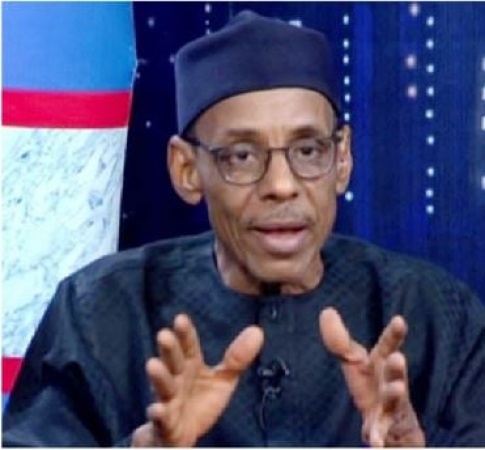
Minister Delegate at the Ministry of External Relations Felix Mbayu
claimed the sanctions were not linked to its human rights record.
"The simple truth is that the US is unhappy with a certain stance we take with China," he said.
In February, China wrote off some of Cameroon's debts.
China also is carrying out projects in Cameroon to forge better ties
with the government. Unlike China and other world powers, the US was not
a major trade partner, Mbayu said.
"The
government has no move to make; we have other partners like China,
Russia and Singapore who are ready to do business with us... We have no
reaction to the US," Mbayu told CNN.
"The
least of our worry now is about the AGOA issue. By the way, it is a
very small part of Cameroon's relationship with the United States," he
added.
The
minister estimated Cameroon's exports to the US under the trade
legislation are $5 million, mostly consisting of agricultural and
petroleum products he said the US "cannot do without."
In a statement reaffirming its commitment to West African nation
despite the sanctions, the US Embassy in Cameroon valued the country's
export to the US at $220 million in 2018. It added that more than a
quarter of the exports came off the AGOA legislation with 90 percent
from petroleum exports.